Quick Answer
Buying property in Pakistan involves much more than choosing a house or plot. You should first determine your budget, research the location, verify the property’s legal status, check the seller’s ownership, review all documents, negotiate the price, pay the required taxes, register the property, complete the ownership transfer, and finally take possession. Following these steps carefully can help you avoid fraud and make a secure investment.
Key Takeaways
- Always verify ownership before paying any money.
- Never buy property in an unapproved housing society.
- Check the property’s legal status through official land records.
- Calculate all taxes and government charges before finalizing your budget.
- Read every clause of the sale agreement carefully.
- Hire qualified legal or real estate professionals if you are unsure about any step.
- Compare multiple properties before making your final decision.
- Overseas Pakistanis should use secure banking channels and proper legal representation.
Introduction
Buying property is one of the biggest financial decisions most people make in their lifetime. Whether you are purchasing your first home, investing in a residential plot, buying a commercial shop, or planning for your family’s future, making the right decision requires careful planning.
Unfortunately, many people lose money because they skip important legal checks, trust unverified sellers, or invest in unauthorized housing societies. These mistakes can lead to financial loss, legal disputes, or years of unnecessary stress.
The good news is that buying property in Pakistan does not have to be complicated. Once you understand the process and know what to check at each stage, you can make informed decisions with confidence.
This comprehensive guide explains every important step in simple language. Whether you are a first-time buyer, an experienced investor, or an overseas Pakistani looking to invest back home, this guide will help you understand the complete property buying process from start to finish.

Why Invest in Property in Pakistan?
Real estate has remained one of Pakistan’s most popular investment options for decades. While every investment carries risks, property continues to attract investors because it provides long-term value, tangible ownership, and multiple income opportunities.
Population Growth Creates Housing Demand
Pakistan has one of the world’s largest populations, and its urban centers continue to expand. Every year, thousands of families move to major cities in search of employment, education, and better living standards. This steady urbanization creates continuous demand for residential and commercial properties.
Protection Against Inflation
Unlike cash savings that lose purchasing power over time, property often retains or increases its value over the long term. Although prices may fluctuate depending on market conditions, quality properties in well-developed locations have historically shown strong long-term appreciation.
Rental Income Opportunities
Residential homes, apartments, offices, shops, and commercial plazas can generate regular rental income. Investors often combine rental returns with long-term capital appreciation to build wealth over time.
Long-Term Wealth Building
Property is a physical asset that can be passed on to future generations. Many families purchase land or homes not only for personal use but also as part of long-term financial planning.
Diversification
Property helps diversify an investment portfolio by adding a tangible asset alongside savings, stocks, or businesses.
Expert Insight
Experienced investors usually focus less on short-term price fluctuations and more on location quality, legal security, and future development potential.

Who Should Read This Guide?
This guide is designed for anyone interested in buying property in Pakistan, regardless of their experience level.
It is especially useful for:
- First-time home buyers
- Families purchasing a permanent residence
- Investors looking for long-term returns
- Overseas Pakistanis planning to invest
- Business owners buying commercial property
- Individuals purchasing agricultural land
- Builders and developers
- Real estate professionals seeking a better understanding of the buying process
No prior knowledge of real estate is required. Every concept is explained in simple, beginner-friendly language.
Things You Must Know Before Buying Property
Before you start searching for properties, it’s important to understand some basic concepts.
Freehold vs Leasehold Property
Freehold Property
The buyer owns both the land and the building permanently. Freehold ownership usually offers greater flexibility and long-term control.
Advantages
- Permanent ownership
- Easier resale
- Greater investment value
Leasehold Property
Ownership is granted for a fixed period under lease agreements.
Advantages
- Lower initial cost
- Suitable in certain government or institutional developments
Disadvantages
- Lease renewal may be required
- Restrictions may apply
Residential vs Commercial Property
| Residential Property | Commercial Property |
|---|---|
| Houses | Shops |
| Apartments | Offices |
| Residential Plots | Warehouses |
| Villas | Commercial Plazas |
Residential properties are generally easier for first-time buyers, while commercial properties may offer higher rental returns but often require a larger investment.
Plot vs House vs Apartment
| Property Type | Best For | Advantages | Considerations |
|---|---|---|---|
| Plot | Long-term investors | Flexible future construction | No immediate rental income |
| House | Families | Ready to move in | Maintenance costs |
| Apartment | Urban buyers | Lower maintenance | Service charges may apply |
Authorized vs Unauthorized Housing Society
This is one of the most important checks before purchasing property.
Always verify whether the housing society has approval from the relevant development authority.
Buying property in an unauthorized society can lead to legal complications, delayed development, or even cancellation of projects.
Possession Property vs File Property
Possession Property
The buyer receives physical possession immediately after completing the legal process.
File Property
A file represents an allocation or future entitlement to a plot that may not yet exist on the ground.
While file investments can sometimes offer attractive returns, they generally involve higher risk compared to possession properties.
Did You Know?
Many first-time buyers mistakenly assume that holding a property file means they own physical land. In reality, possession and legal transfer may occur much later depending on the project’s development.

Types of Property You Can Buy in Pakistan
Understanding different property categories helps you choose an investment that matches your goals.
Residential Plot
Suitable for buyers planning to build a home in the future.
Pros
- Lower maintenance
- Flexible construction timeline
- Long-term appreciation potential
Cons
- No immediate rental income
- Construction costs are separate
House
Ideal for families looking to move in immediately.
Pros
- Ready to use
- Rental income potential
- Easier financing options
Cons
- Maintenance expenses
- Structural inspections required
Apartment
A practical choice in major cities where land is limited.
Pros
- Lower maintenance
- Better security
- Shared amenities
Cons
- Monthly maintenance charges
- Limited customization
Commercial Property
Includes shops, offices, warehouses, and plazas.
Best For
- Business owners
- Long-term investors
- Rental income seekers
Commercial properties generally require larger investments but can provide higher rental yields depending on location and demand.
Agricultural Land
Suitable for farming, long-term investment, or development (subject to local laws and zoning regulations).
Before purchasing agricultural land, verify ownership records, land use restrictions, water availability, and any applicable government regulations.
Choosing the Right Property
Ask yourself:
- Are you buying to live or invest?
- Do you need immediate possession?
- What is your budget?
- How long can you hold the investment?
- Do you expect rental income?
- Is future appreciation your primary goal?
Answering these questions before searching for properties will make the rest of the buying process much easier.
Understanding the Complete Property Buying Process (Steps 1–8)
Buying property is not a single transaction—it is a structured process. Skipping even one important step can expose you to legal disputes, financial losses, or property fraud.
Below is the ideal property buying journey followed by experienced investors and real estate professionals.
| Step | Action | Why It Matters |
|---|---|---|
| 1 | Set Your Budget | Avoid financial stress |
| 2 | Choose the Right City | Better investment returns |
| 3 | Select the Right Location | Higher appreciation and convenience |
| 4 | Research the Property | Identify hidden issues |
| 5 | Verify Ownership | Prevent fraud |
| 6 | Verify the Housing Society | Ensure legal approval |
| 7 | Verify the Seller | Confirm legal authority to sell |
| 8 | Negotiate & Pay Token | Secure the property safely |
| 9 | Sign Sale Agreement | Legal protection |
| 10 | Pay Taxes & Fees | Complete legal obligations |
| 11 | Register the Property | Official ownership |
| 12 | Mutation & Transfer | Update government records |
| 13 | Take Possession | Receive legal control |
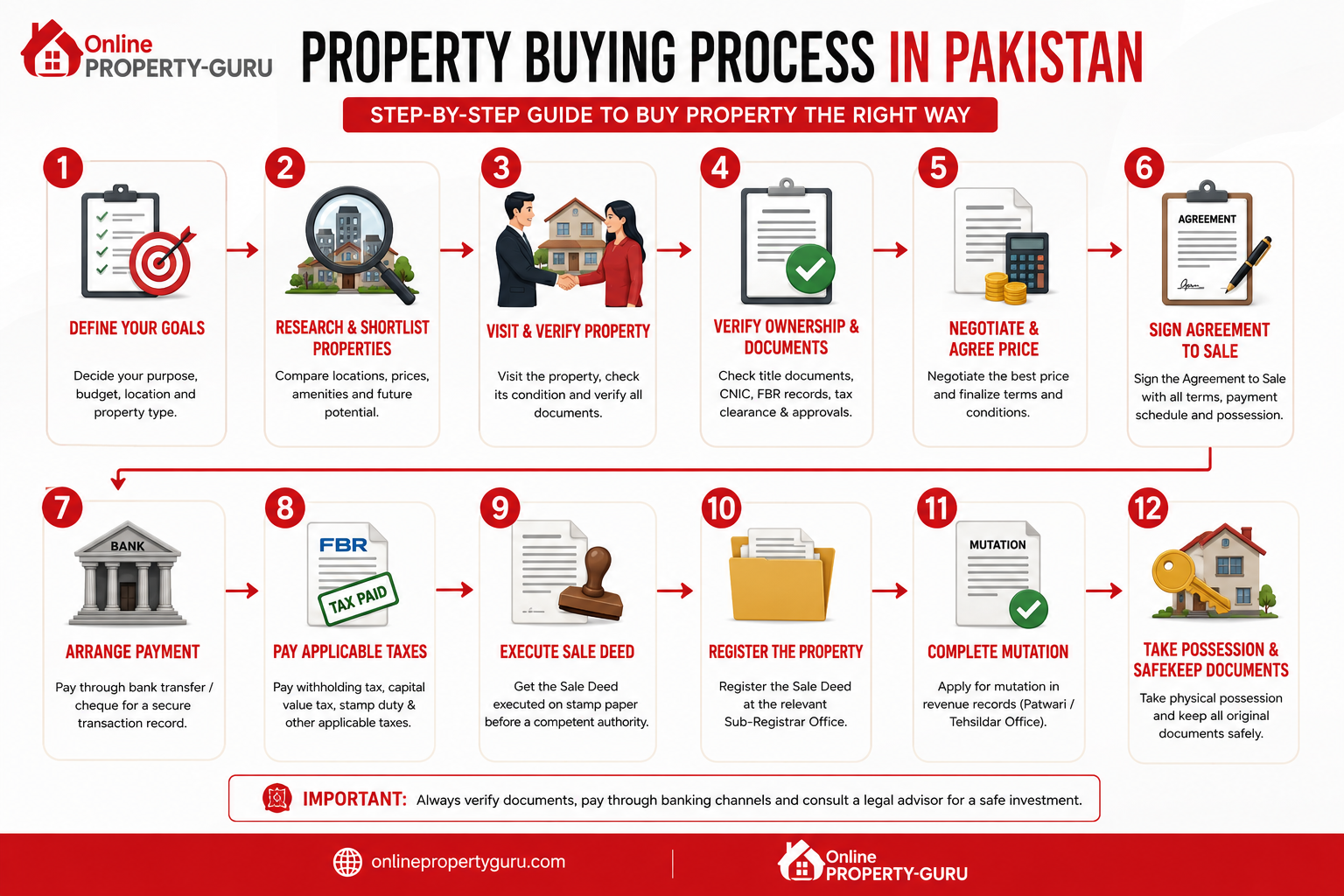
Step 1 – Set Your Budget
One of the biggest mistakes first-time buyers make is focusing only on the property’s advertised price.
In reality, purchasing property involves several additional costs.
Calculate Your Total Budget
Your total budget should include:
- Property price
- Government taxes
- Registration fees
- Stamp duty
- Capital Value Tax (CVT)
- Society transfer charges
- Broker commission (if applicable)
- Legal consultation fees
- Property inspection costs
- Renovation expenses
- Utility connection charges
- Emergency reserve
Example
If your property costs PKR 10,000,000, you may need additional funds for taxes, registration, transfer fees, legal expenses, and minor repairs. Planning only for the purchase price can create unexpected financial pressure.
Expert Tip
Never spend 100% of your savings on buying property. Keeping an emergency fund can help you manage unforeseen expenses after the purchase.
Step 2 – Choose the Right City
The city you choose significantly affects your property’s future value, rental income, and resale potential.
What Should You Evaluate?
Before selecting a city, consider:
- Population growth
- Employment opportunities
- Infrastructure development
- Road connectivity
- Education facilities
- Healthcare
- Future government projects
- Business activity
- Public transportation
Popular Cities for Property Investment
Lahore
Ideal for:
- Families
- Residential buyers
- Long-term investors
Known for:
- Strong housing demand
- Expanding road network
- New housing developments
Karachi
Suitable for:
- Commercial investment
- Rental income
- Business owners
Advantages
- Largest commercial city
- Strong rental market
- Diverse property options
Islamabad
Best for:
- Premium residential investment
- Overseas Pakistanis
- High-end buyers
Advantages
- Planned infrastructure
- Better urban management
- Premium neighborhoods
Rawalpindi
Offers relatively affordable investment opportunities while benefiting from its proximity to Islamabad.
Faisalabad
Popular among industrial investors and families due to its growing economy and manufacturing sector.
Multan
An emerging market with increasing residential and commercial development.
Peshawar
Offers opportunities for local investors looking for long-term residential growth.
Comparison Table
| City | Residential | Commercial | Rental Demand | Investment Potential |
|---|---|---|---|---|
| Lahore | ★★★★★ | ★★★★☆ | High | High |
| Karachi | ★★★★☆ | ★★★★★ | Very High | High |
| Islamabad | ★★★★★ | ★★★★☆ | High | High |
| Rawalpindi | ★★★★☆ | ★★★☆☆ | Medium | Good |
| Faisalabad | ★★★★☆ | ★★★★☆ | Medium | Good |
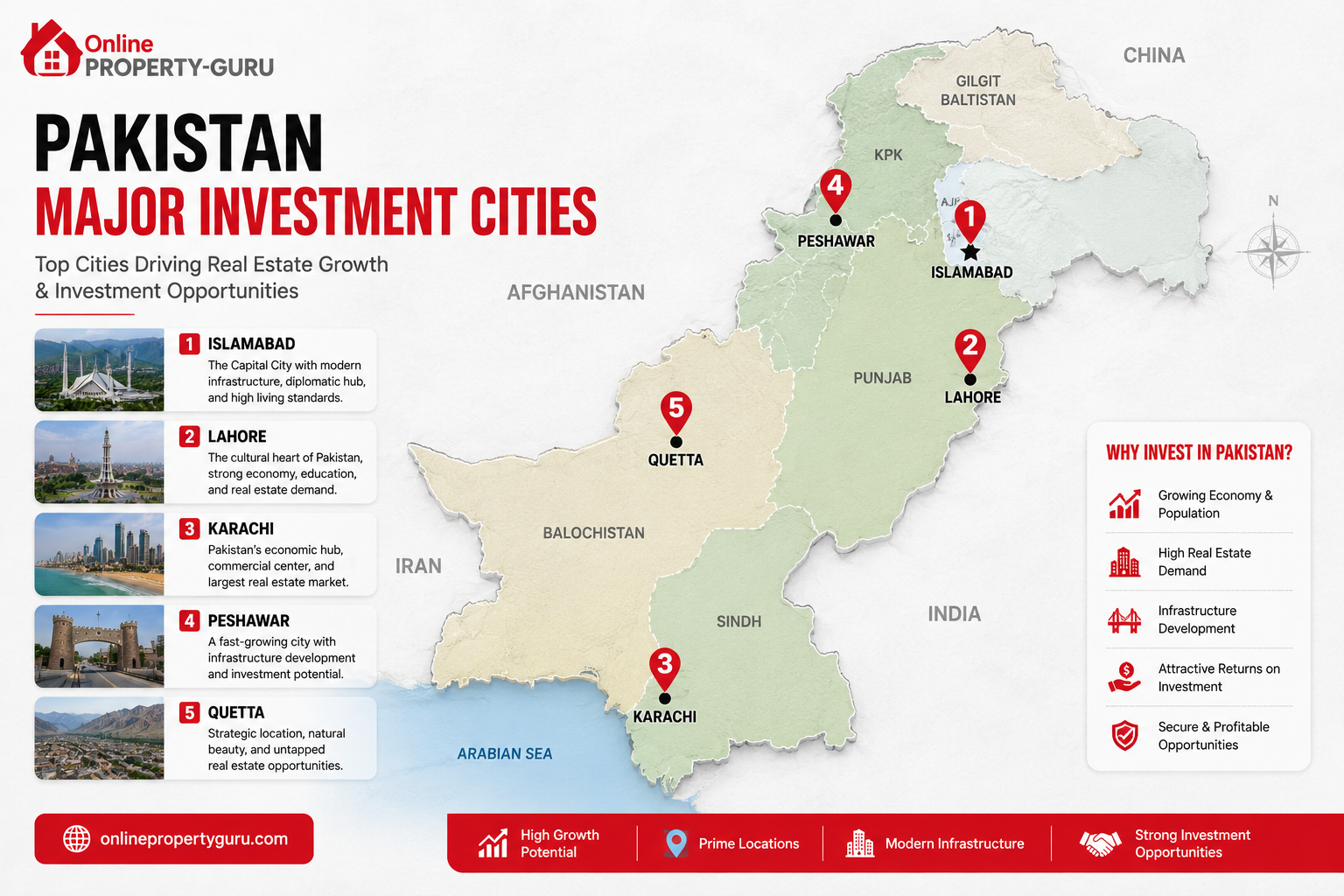
Step 3 – Choose the Right Area
Buying property in the right city is only the first step. The specific neighborhood often has an even greater impact on property value.
Evaluate the Area Carefully
Visit the location at different times of the day.
Check:
- Road condition
- Traffic
- Cleanliness
- Security
- Water availability
- Electricity supply
- Internet access
- Public transport
- Nearby schools
- Hospitals
- Markets
- Mosques
- Parks
Future Development Matters
Ask questions like:
- Is a new road being built?
- Are commercial projects planned?
- Is a metro line proposed?
- Are schools expanding?
- Is the area growing rapidly?
Future infrastructure often increases property values over time.
Practical Example
A property located slightly outside the city but near a planned expressway may appreciate faster than an older property in a fully developed area.
Step 4 – Research the Property
Never purchase property after only one visit.
Inspect it thoroughly.
Exterior Inspection
Check:
- Boundary walls
- Road access
- Drainage
- Street lighting
- Parking
- Water supply
Interior Inspection (House or Apartment)
Inspect:
- Walls
- Roof
- Flooring
- Doors
- Windows
- Plumbing
- Electrical wiring
- Bathrooms
- Kitchen
- Ceiling leakage
- Ventilation
Commercial Property Inspection
Verify:
- Customer access
- Parking
- Business surroundings
- Utility capacity
- Loading areas
- Commercial zoning
Questions to Ask
- Why is the owner selling?
- How long has the property been owned?
- Has it ever been renovated?
- Are there any disputes?
- Is there an outstanding loan?
Red Flags
Avoid properties that show signs of:
- Major structural cracks
- Water leakage
- Illegal construction
- Encroachments
- Poor drainage
- Frequent flooding
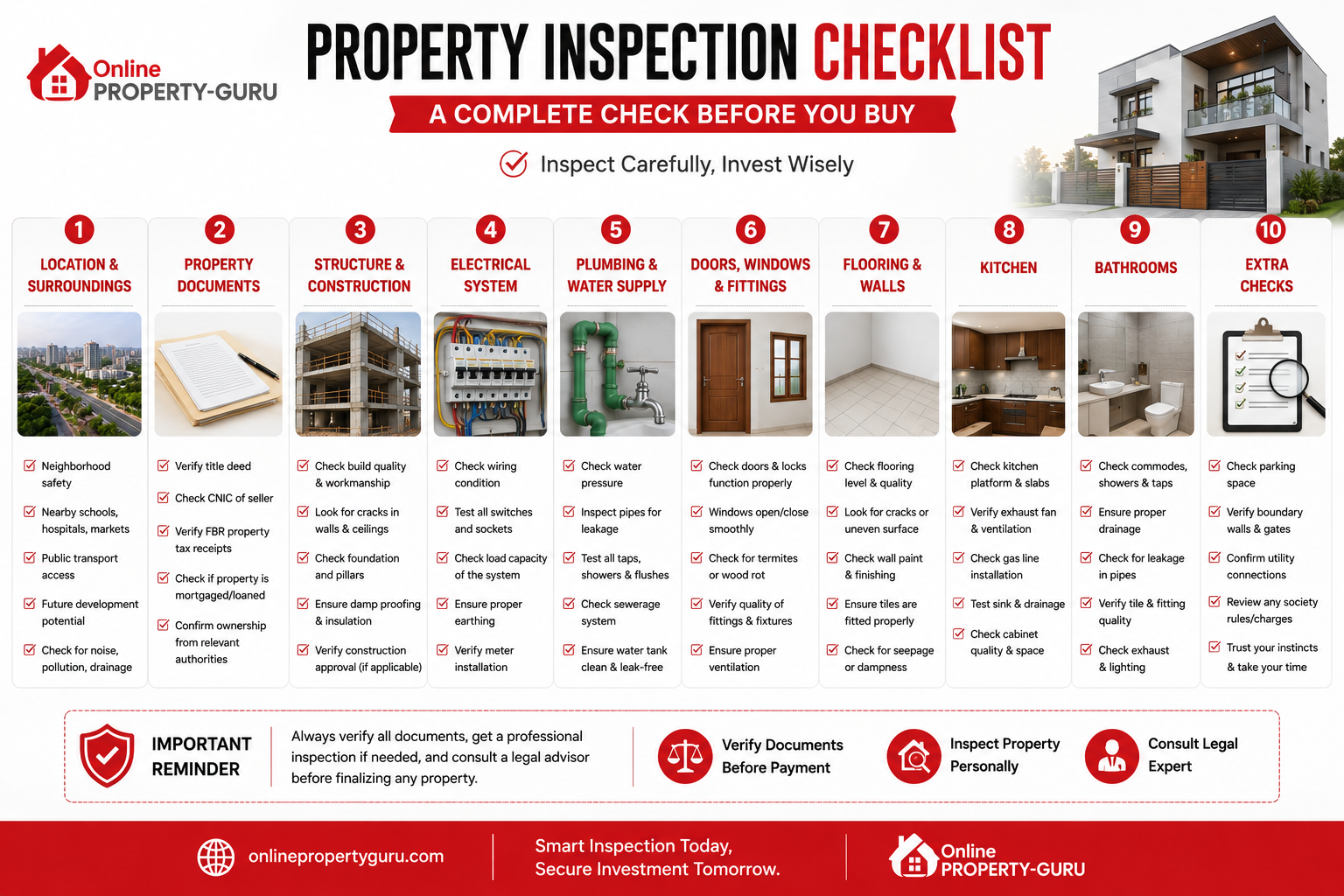
Step 5 – Verify Property Ownership
This is the most important stage of the entire buying process.
Many property scams occur because buyers fail to verify ownership before making payments.
Verify the Legal Owner
Confirm:
- Seller’s name
- CNIC
- Ownership documents
- Transfer history
The seller’s information should match all official records.
Review Important Documents
Depending on the property, documents may include:
- Sale Deed
- Registry
- Mutation Record
- Allotment Letter
- Transfer Letter
- Possession Letter
- Property Tax Record
- Approved Site Plan
Check Ownership History
Ask:
- How many previous owners?
- Any legal disputes?
- Bank mortgage?
- Court stay order?
- Family inheritance claims?
Verify Land Records
Where available, verify land ownership through the relevant provincial land record authority or development authority.
Never rely solely on photocopies provided by the seller.
Expert Advice
Whenever possible, have an experienced property lawyer review the ownership documents before signing any agreement or making any payment.
Step 6 – Verify the Housing Society
Many buyers focus only on the property itself and ignore the legal status of the housing society.
This can be a costly mistake.
Confirm Approval
Verify whether the housing society has approval from the relevant development authority.
Also check:
- Approved layout plan
- Development status
- Utility availability
- Road network
- Legal notices
- Court cases
- NOC status
Evaluate the Developer
Research:
- Previous projects
- Delivery history
- Financial stability
- Customer reviews
- Infrastructure quality
A reputable developer usually indicates lower investment risk.
Warning Signs
Avoid societies that:
- Promise unrealistic returns
- Lack basic infrastructure
- Cannot provide legal approvals
- Frequently change development plans
- Offer unusually low prices without explanation
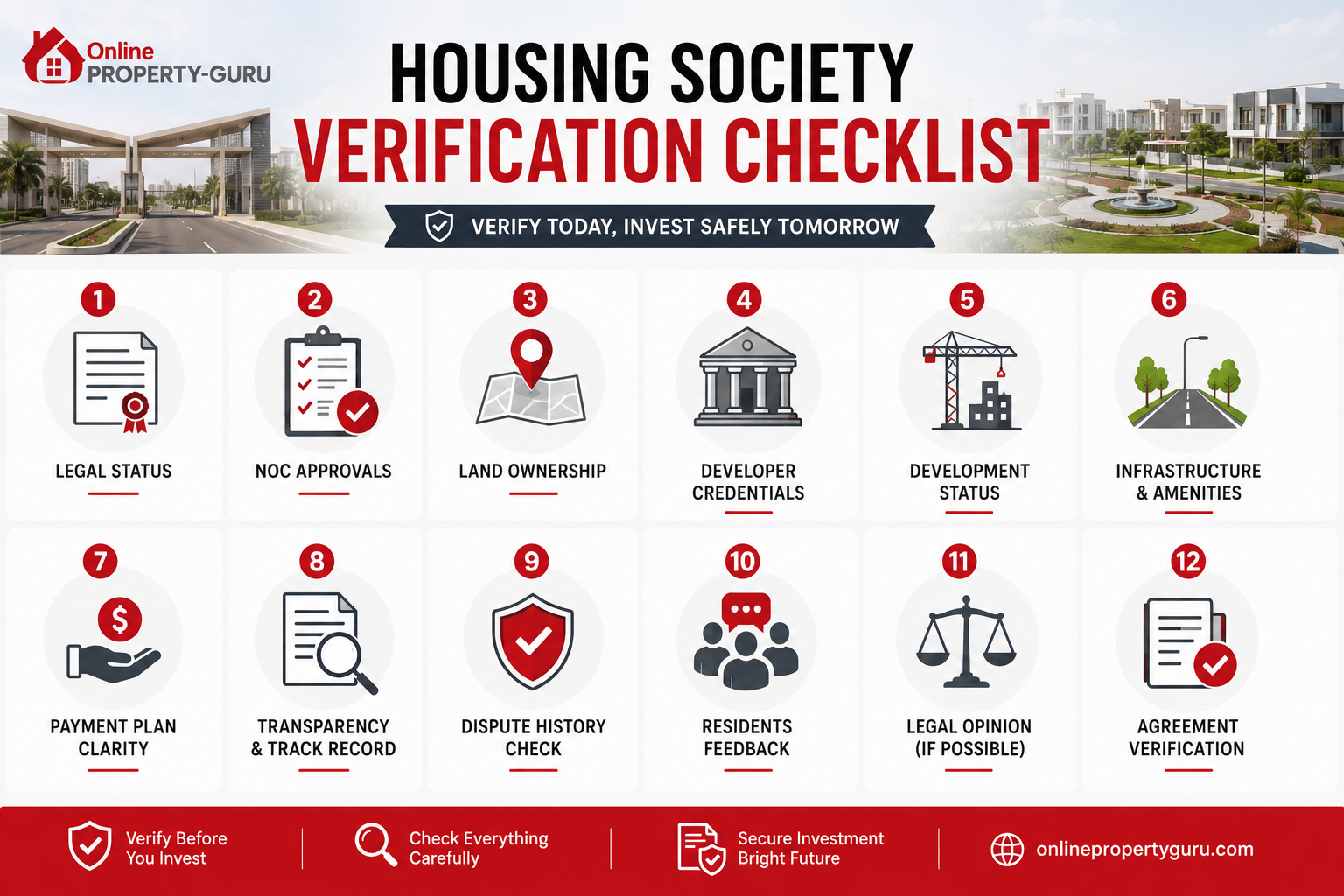
Step 7 – Verify the Seller
Even if the property is genuine, you must confirm that the seller has the legal authority to sell it.
Verify Identity
Request:
- Original CNIC
- Recent photographs
- Contact information
Confirm Ownership Authority
If someone is selling on behalf of another person, verify the legal documents that authorize them to do so.
Examples include:
- Power of Attorney
- Company authorization
- Court orders
- Inheritance documents
Joint Ownership
If multiple individuals own the property, ensure that all required owners participate in the transaction or have provided valid legal authorization.
Company-Owned Property
When purchasing from a company, verify:
- Company registration
- Board approval
- Authorized signatory
- Corporate ownership documents
Step 8 – Negotiate the Price
Many buyers accept the first asking price without conducting proper market research.
Instead, compare similar properties in the same area.
Consider:
- Property age
- Construction quality
- Corner location
- Road width
- Facing park
- Commercial access
- Future development
Negotiation Tips
- Stay within your budget.
- Don’t reveal your maximum budget immediately.
- Compare at least three similar properties.
- Use market data to justify your offer.
- Be prepared to walk away if the deal is unreasonable.
Paying Token Money
Once both parties agree on the price, the buyer often pays token money to reserve the property.
Before Paying Token Money
Ensure:
- Ownership has been verified.
- Seller identity is confirmed.
- Property documents have been reviewed.
- Payment receipt is prepared.
- Terms for refund are clearly documented.
Never pay token money without written documentation.
Practical Example
Suppose a buyer pays a token amount without verifying ownership. Later, it is discovered that the seller is not the legal owner. Recovering the payment may become difficult and could involve lengthy legal proceedings.
A simple verification process before payment can prevent such situations.
Complete the Legal Process (Steps 9–15)
Step 9 – Sign the Sale Agreement
Once both parties agree on the price and the token money has been paid, the next step is to prepare a legally binding Sale Agreement (also known as an Agreement to Sell).
This document protects both the buyer and the seller by clearly outlining the terms of the transaction.
What Should a Sale Agreement Include?
A professionally drafted agreement should contain:
- Full names and CNIC numbers of the buyer and seller
- Complete property description
- Agreed purchase price
- Token money paid
- Remaining payment schedule
- Mode of payment
- Possession date
- Registration date
- Responsibilities of both parties
- Penalty clauses for breach of agreement
- Conditions for cancellation
- Signatures of both parties and witnesses
Why Is the Sale Agreement Important?
Without a written agreement, disagreements about payment, timelines, or possession can become difficult to resolve.
A clear agreement helps reduce misunderstandings and provides evidence if a legal dispute arises.
Expert Tip
Have the agreement reviewed by a qualified property lawyer before signing, especially for high-value transactions.

Step 10 – Calculate Taxes and Government Charges
Many buyers focus only on the property’s purchase price and overlook the additional government charges involved.
These costs vary depending on:
- Property value
- Province
- Buyer status
- Seller status
- Applicable tax laws
- Type of property
Always verify the latest rates before completing the transaction.
Common Costs Associated with Buying Property
| Expense | Purpose |
|---|---|
| Stamp Duty | Government documentation fee |
| Registration Fee | Property registration |
| Capital Value Tax (CVT) | Government tax on property transfer |
| Advance Tax | Applicable under tax laws where relevant |
| Mutation Fee | Updating ownership records |
| Society Transfer Charges | Transfer within a housing society |
| Legal Fees | Lawyer or legal consultant charges |
| Broker Commission | Real estate agent’s fee (if applicable) |
Budgeting Tip
Reserve additional funds beyond the purchase price to comfortably cover taxes, legal costs, and administrative fees.
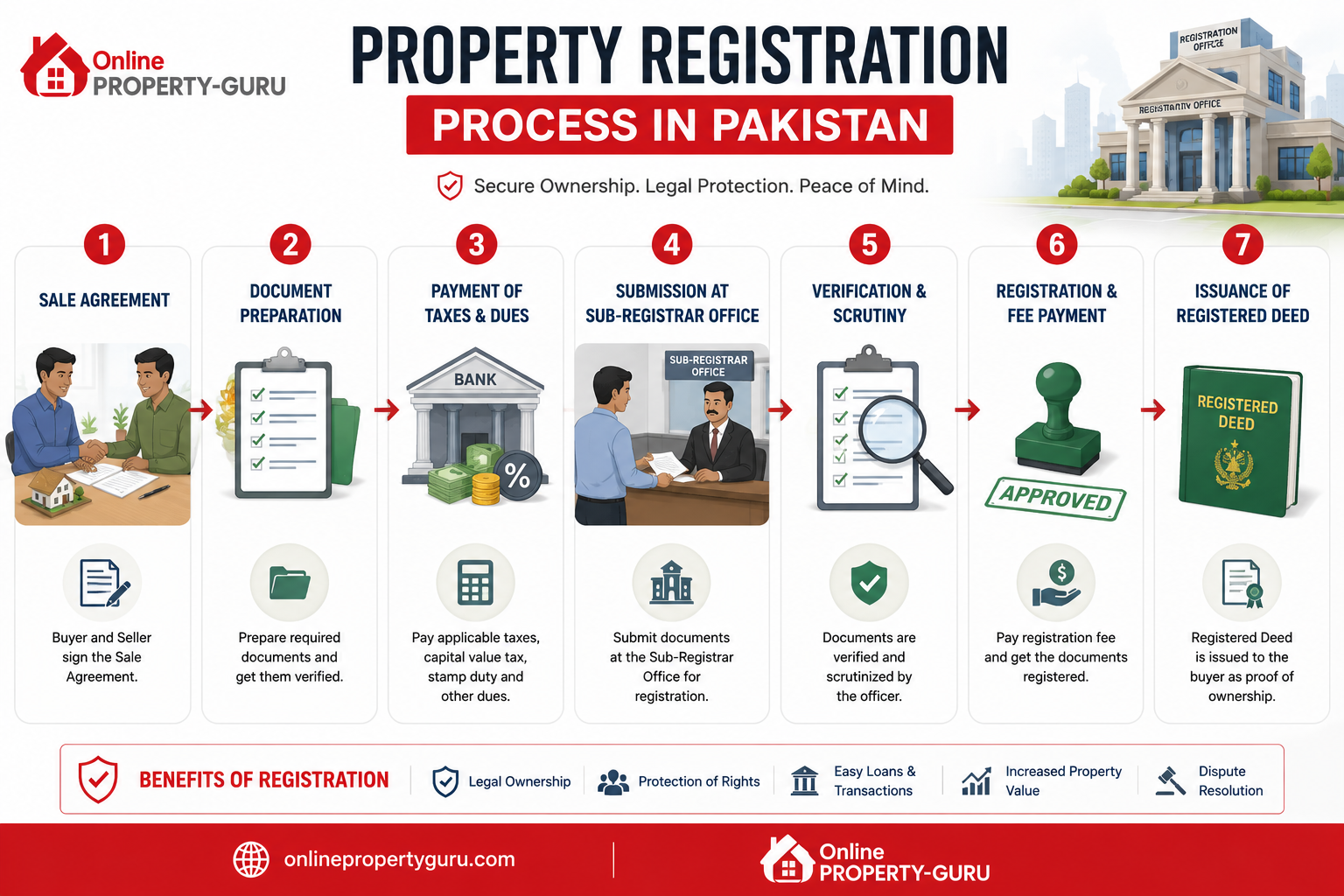
Step 11 – Register the Property
Property registration is one of the most important legal steps in the buying process.
Registration officially records the transaction and provides legal recognition of the ownership transfer.
Typical Registration Process
- Prepare the required documents.
- Verify buyer and seller identities.
- Submit documents to the relevant registration authority.
- Pay applicable government fees.
- Complete biometric verification where required.
- Register the sale deed.
- Obtain the registered documents.
Documents Commonly Required
Buyer
- Original CNIC
- Passport-size photographs (if required)
- Proof of payment
- Tax information (where applicable)
Seller
- Original CNIC
- Original ownership documents
- Sale deed
- Property tax receipts
- No-objection certificates (where applicable)
Note
Requirements may vary by province, housing society, and property type. Always confirm the latest documentation requirements with the relevant authority.
Step 12 – Complete Mutation (Ownership Transfer)
Many first-time buyers believe that registration alone completes the transaction.
In reality, mutation (also known as ownership transfer or Intiqal) is another critical step.
Mutation updates the government land records to show the buyer as the new owner.
Without completing this process, official records may still reflect the previous owner’s name.
Why Mutation Matters
Mutation helps:
- Update official ownership records
- Simplify future property sales
- Support inheritance claims
- Reduce the risk of ownership disputes
- Facilitate future financing
Documents Typically Required
- Registered sale deed
- Buyer’s CNIC
- Seller’s CNIC
- Property details
- Application forms
- Applicable government fee receipts
Common Mistake
Some buyers delay mutation for months or even years.
This can create complications during resale, inheritance, or legal verification.
Complete the ownership transfer as soon as possible after registration.
Step 13 – Take Legal Possession
After registration and ownership transfer, the buyer should formally take possession of the property.
Possession involves much more than receiving the keys.
Possession Checklist
Before accepting possession, verify:
- Property boundaries
- Keys
- Electricity meter
- Gas meter
- Water connection
- Sewerage connection
- Parking allocation
- Utility bills
- Property tax status
- Society dues
- Maintenance charges
For apartments, also check:
- Elevator access
- Security cards
- Parking rights
- Maintenance office records
No-Dues Certificate
If the property is located within a housing society, ask for confirmation that:
- Maintenance charges are cleared.
- Development charges have been paid.
- Utility dues are settled.
- Transfer charges have been completed.
This reduces the risk of inheriting outstanding liabilities from the previous owner.

Property Buying Timeline
Every transaction is different, but a typical property purchase may follow this timeline.
| Stage | Estimated Time |
|---|---|
| Property Research | 1–4 weeks |
| Property Visits | 1–2 weeks |
| Ownership Verification | 2–7 days |
| Negotiation | 1–5 days |
| Sale Agreement | 1–3 days |
| Registration | Varies by authority |
| Mutation | Varies by authority |
| Possession | Immediately after legal completion or as agreed |
Delays may occur due to documentation issues, legal disputes, financing arrangements, or administrative procedures.
Estimated Property Buying Costs
Below is an example of the types of expenses buyers should plan for.
| Category | Typical Cost |
|---|---|
| Property Purchase Price | Largest expense |
| Government Taxes | Varies |
| Registration Charges | Varies |
| Society Transfer Fee | Varies |
| Legal Consultation | Depends on the case |
| Broker Commission | Depends on agreement |
| Property Inspection | Optional but recommended |
| Renovation | If required |
| Utility Transfers | May apply |
Remember that actual costs depend on location, property value, and current government regulations.
Buying Property as an Overseas Pakistani
Thousands of Overseas Pakistanis invest in property every year to build long-term wealth, generate rental income, or secure a home for their families.
While the buying process is similar, overseas buyers should take additional precautions.
Verify Everything Remotely
If you cannot visit Pakistan personally:
- Request high-quality photos and videos.
- Schedule live virtual property tours.
- Verify all documents independently.
- Use trusted legal representatives.
Never rely solely on promotional brochures or verbal promises.
Use Secure Banking Channels
Maintain proper financial records and use recognized banking channels for payments.
Avoid making large cash payments through unofficial intermediaries.
Appoint a Trusted Representative
If someone will complete the transaction on your behalf:
- Ensure they have proper legal authorization.
- Clearly define their responsibilities.
- Keep copies of all signed documents.
Conduct Independent Verification
Even if a trusted relative recommends a property, independently verify:
- Ownership
- Society approval
- Legal status
- Taxes
- Development progress
Independent verification reduces risk and protects your investment.
Comparison: Buying Property Yourself vs Hiring a Property Consultant
| Buying Yourself | Using a Professional Consultant |
|---|---|
| Lower service costs | Professional guidance |
| Requires extensive research | Saves time |
| Higher risk of missing legal issues | Better documentation support |
| Suitable for experienced buyers | Ideal for first-time buyers |
The best approach depends on your experience, available time, and comfort with legal procedures.
Avoid Costly Mistakes & Make Smarter Property Decisions
How to Avoid Property Fraud in Pakistan
Property fraud is one of the biggest concerns for buyers in Pakistan. While most real estate transactions are legitimate, fraudulent schemes still exist. Fortunately, most scams can be avoided with proper research, legal verification, and patience.
The most important rule is simple:
Never let excitement replace due diligence.
A beautiful property, a low price, or a promise of “limited-time investment” should never convince you to skip legal checks.
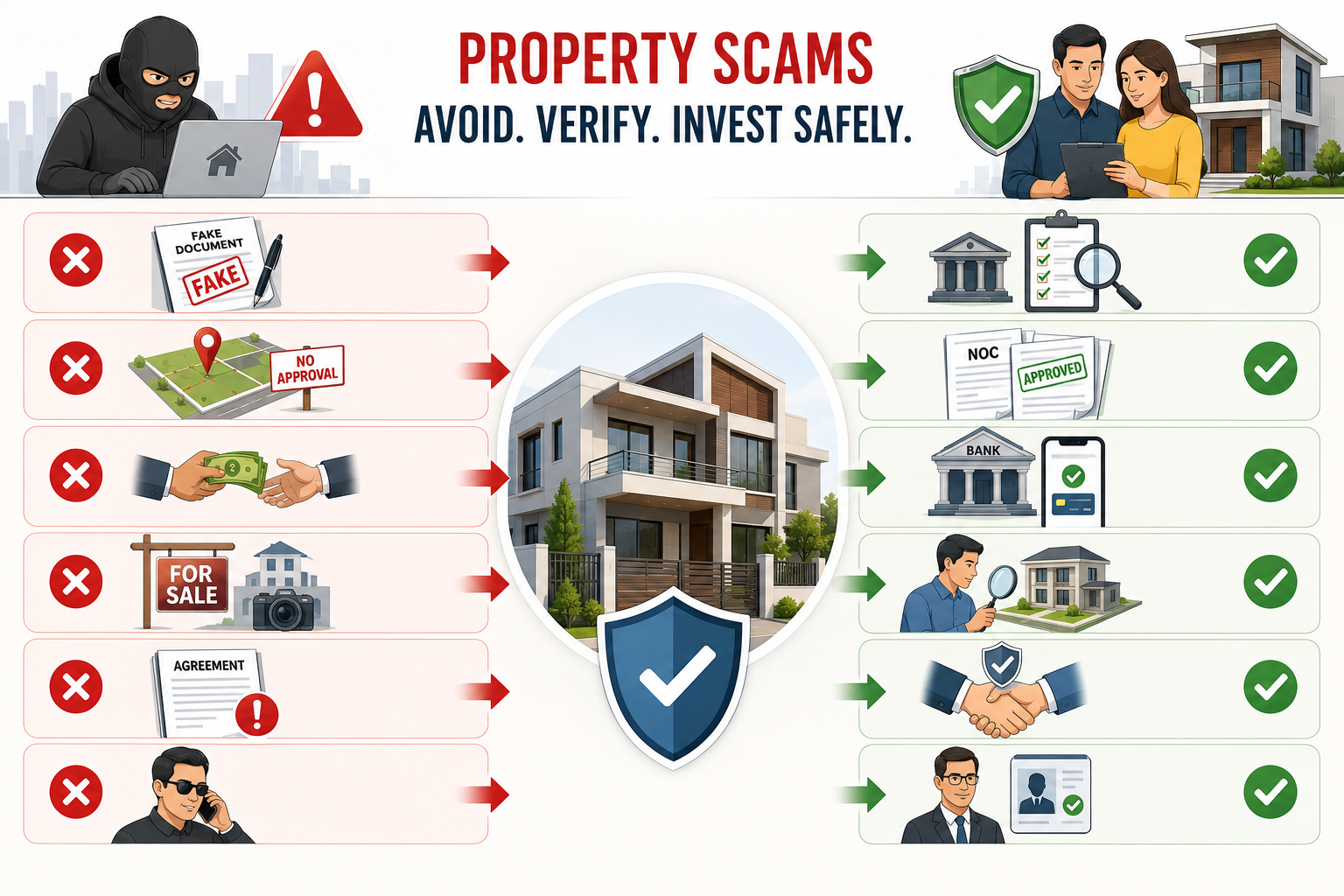
Common Property Scams in Pakistan
Understanding common scams can help you recognize warning signs before it’s too late.
1. Fake Ownership Documents
Fraudsters may create forged sale deeds, fake allotment letters, or altered ownership records.
How to protect yourself:
- Verify documents with the relevant authority.
- Compare original documents with official records.
- Hire a property lawyer for document verification.
2. Selling Property Without Legal Authority
Sometimes a person tries to sell property that belongs to another family member, business partner, or inherited estate.
Always verify:
- Original ownership
- CNIC details
- Power of Attorney (if applicable)
- Joint ownership approvals
3. Selling the Same Property to Multiple Buyers
This scam often targets buyers who pay token money without proper documentation.
Protection Tips
- Sign a written agreement.
- Obtain payment receipts.
- Complete legal documentation promptly.
4. Fake Housing Societies
Some illegal housing schemes advertise attractive prices before obtaining government approval.
Always verify
- NOC
- Development authority approval
- Layout plan
- Infrastructure progress
5. Unrealistic Investment Promises
Be cautious if someone promises:
- Guaranteed profits
- Double your investment in a few months
- Risk-free returns
- Limited-time secret opportunities
No genuine investment is completely risk-free.
Warning Signs of Property Fraud
Watch for these red flags:
- Property price far below market value
- Seller refuses document verification
- Pressure to make immediate payment
- Missing original documents
- Unclear ownership history
- Frequent excuses for delays
- Cash-only transactions
- Unapproved housing society
- Incomplete development
- No written agreement
If multiple warning signs appear, pause the transaction and investigate further.
Common Mistakes First-Time Property Buyers Make
Learning from other people’s mistakes can save both time and money.
1. Buying Without a Budget
Many buyers search for properties before determining how much they can realistically afford.
Always calculate:
- Purchase price
- Taxes
- Registration fees
- Legal costs
- Maintenance expenses
2. Ignoring Property Verification
Skipping ownership verification is one of the most expensive mistakes a buyer can make.
Never assume that documents are genuine simply because they appear official.
3. Choosing Price Over Location
A cheap property in a poor location may perform worse than a moderately priced property in a growing area.
Location affects:
- Future appreciation
- Rental demand
- Resale value
- Quality of life
4. Rushing the Decision
Some buyers purchase the first property they visit.
Instead:
- Compare multiple properties.
- Visit different neighborhoods.
- Research recent market prices.
5. Ignoring Future Development
Ask questions such as:
- Are new roads planned?
- Will commercial areas expand?
- Is public transport improving?
- Are schools or hospitals under construction?
Infrastructure projects often influence future property values.
6. Trusting Verbal Promises
If it is not written in the agreement, do not assume it will happen.
Everything should be documented.
7. Forgetting Hidden Costs
Property ownership involves more than the purchase price.
Additional costs may include:
- Utility transfers
- Renovation
- Maintenance
- Society charges
- Security deposits
8. Not Seeking Professional Advice
Buying property is often a once-in-a-lifetime investment.
When necessary, consult:
- Property lawyers
- Tax consultants
- Civil engineers
- Experienced real estate professionals
Professional guidance may prevent costly mistakes.
Questions You Should Ask Before Buying Any Property
Asking the right questions helps uncover issues that may not be immediately visible.
Questions About Ownership
- Who is the legal owner?
- How long has the owner held the property?
- Is there more than one owner?
- Is the property inherited?
- Is it under mortgage?
Questions About Documentation
- Are all original documents available?
- Has the property been registered?
- Has mutation been completed?
- Are taxes fully paid?
- Are utility bills cleared?
Questions About the Property
- Why is the owner selling?
- Has the property ever been renovated?
- Are there structural issues?
- Is flooding common?
- Are there water supply issues?
Questions About the Area
- Is the neighborhood safe?
- What schools are nearby?
- Are hospitals easily accessible?
- Is public transport available?
- Are future development projects planned?
Questions About Costs
- What taxes are payable?
- Are there society transfer charges?
- What are the annual maintenance costs?
- Are there any outstanding dues?
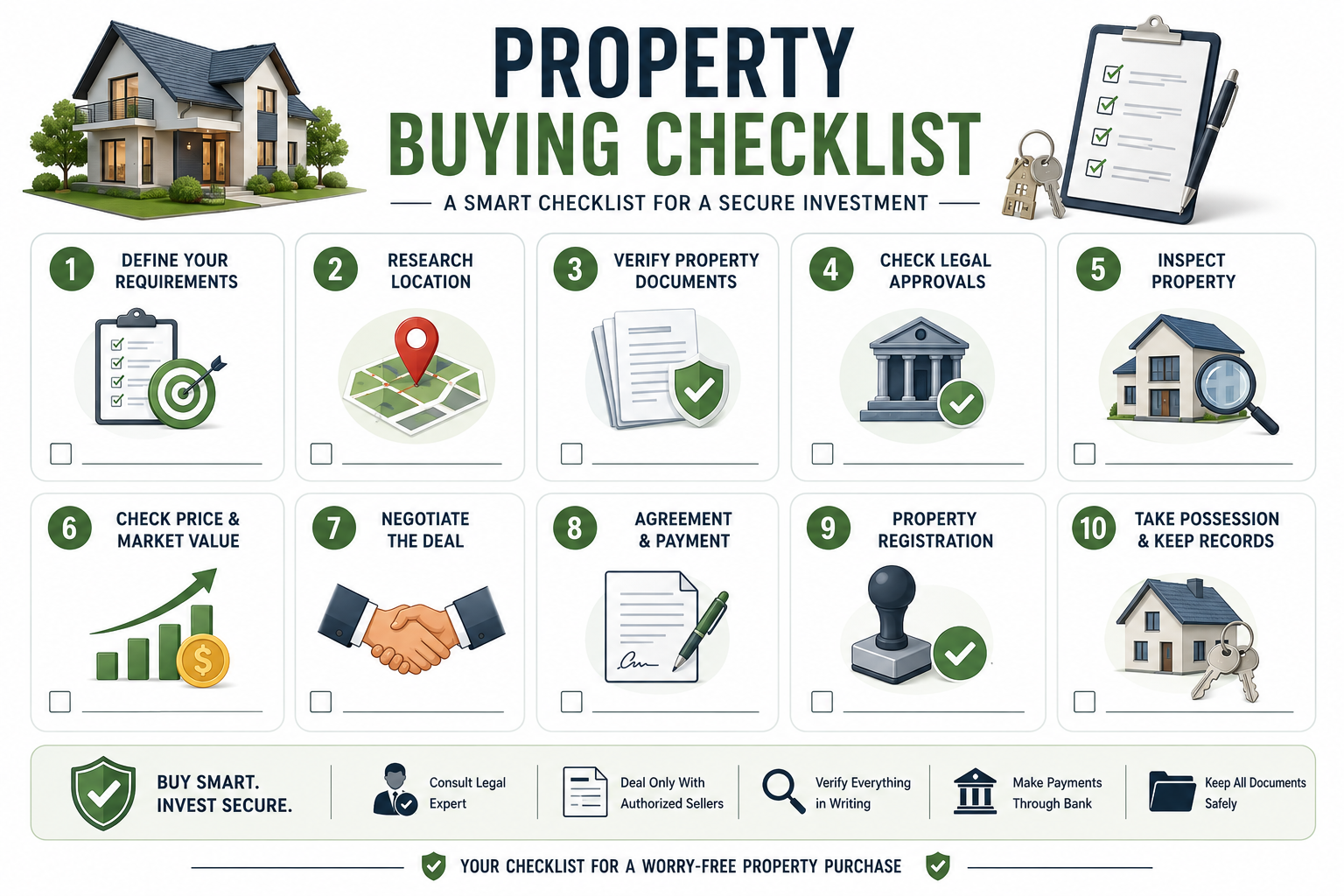
Property Buying Checklist
Use this checklist before making your final payment.
| Checklist Item | Status |
|---|---|
| Budget prepared | □ |
| Location researched | □ |
| Property inspected | □ |
| Ownership verified | □ |
| Seller verified | □ |
| Society approval confirmed | □ |
| Documents reviewed | □ |
| Lawyer consulted | □ |
| Taxes calculated | □ |
| Sale agreement signed | □ |
| Registration completed | □ |
| Mutation completed | □ |
| Possession received | □ |
| Utility transfers completed | □ |
Save or print this checklist to keep track of every step.
Pros and Cons of Buying Property in Pakistan
Every investment has advantages and disadvantages. Understanding both helps you make realistic decisions.
| Advantages | Disadvantages |
|---|---|
| Tangible asset | High initial investment |
| Long-term appreciation potential | Market fluctuations |
| Rental income opportunities | Taxes and government fees |
| Inflation protection | Maintenance costs |
| Can be inherited | Legal verification required |
| Portfolio diversification | Liquidity may be lower than some investments |
Practical Example 1: Buying a Residential Plot
Scenario
Ali wants to buy a 10 Marla residential plot for future home construction.
His Process
- Sets a realistic budget.
- Shortlists three housing societies.
- Verifies legal approval.
- Confirms ownership documents.
- Negotiates the price.
- Signs a sale agreement.
- Registers the property.
- Completes mutation.
Result:
Ali confidently secures legally verified land and avoids unnecessary risks.
Practical Example 2: Buying a Family Home
Sara is purchasing a ready-to-move house.
Before buying, she:
- Hires a civil engineer for inspection.
- Checks plumbing and electrical systems.
- Reviews ownership documents.
- Confirms taxes are paid.
- Ensures utilities are active.
- Verifies there are no outstanding society dues.
Result:
She avoids expensive repair costs after moving in.
Practical Example 3: Overseas Pakistani Investor
Ahmed lives abroad and wants to invest in Pakistan.
Instead of relying only on online advertisements, he:
- Verifies documents independently.
- Uses secure banking channels.
- Appoints a trusted legal representative.
- Conducts virtual property inspections.
- Reviews society approvals.
Result:
His investment remains legally secure despite being overseas.
Decision Guide: Which Property Is Right for You?
| Goal | Recommended Property |
|---|---|
| Build a future home | Residential Plot |
| Move in immediately | House |
| Lower maintenance | Apartment |
| Generate rental income | Commercial Property |
| Long-term land investment | Agricultural Land (subject to local laws) |
Should You Buy Now or Wait?
This is one of the most common questions among buyers.
The answer depends on several factors:
Consider buying when:
- You have a stable financial position.
- You have completed legal verification.
- The property matches your long-term goals.
- You can comfortably afford all associated costs.
Consider waiting if:
- Your finances are uncertain.
- Documentation is incomplete.
- Ownership cannot be verified.
- The housing society lacks legal approval.
- You feel pressured into making a quick decision.
Buying at the right time is often more important than trying to predict short-term market movements.
Expert Advice, FAQs, Final Verdict & Resources
Expert Insights from Real Estate Professionals
Buying property is one of the most significant financial decisions most people will ever make. While every transaction is unique, experienced professionals consistently emphasize a few key principles that can help buyers reduce risk and make informed decisions.
Insight from a Real Estate Consultant
“The best investment is not always the cheapest property. A legally verified property in a well-planned location often delivers better long-term value than a low-priced property with uncertain legal status.”
Before making any payment:
- Compare multiple properties.
- Research recent market prices.
- Visit the property more than once.
- Evaluate future development in the surrounding area.
Insight from a Property Lawyer
“Many legal disputes could be avoided if buyers verified ownership documents before paying token money.”
A lawyer should review:
- Sale Agreement
- Ownership documents
- Registry
- Mutation records
- Power of Attorney (if applicable)
- Property tax records
Legal advice is especially valuable when purchasing inherited property, commercial real estate, or high-value investments.
Insight from a Civil Engineer
“When buying a constructed property, inspect more than the paint and flooring.”
A structural inspection should include:
- Foundation
- Roof
- Plumbing
- Electrical wiring
- Drainage
- Waterproofing
- Cracks
- Ventilation
Minor cosmetic issues are easy to repair, but structural defects can become expensive over time.
Insight from a Tax Consultant
“Buyers often underestimate taxes and government charges.”
Before finalizing your purchase, calculate:
- Government taxes
- Registration charges
- Society transfer fees
- Legal expenses
- Future property taxes
A complete financial plan prevents unexpected costs later.
Insight for Overseas Pakistanis
If you cannot personally inspect the property:
- Conduct virtual inspections.
- Verify documents independently.
- Use trusted legal representatives.
- Transfer funds through recognized banking channels.
- Keep copies of every document and payment receipt.
Remote buying requires additional caution but can be completed safely with proper due diligence.
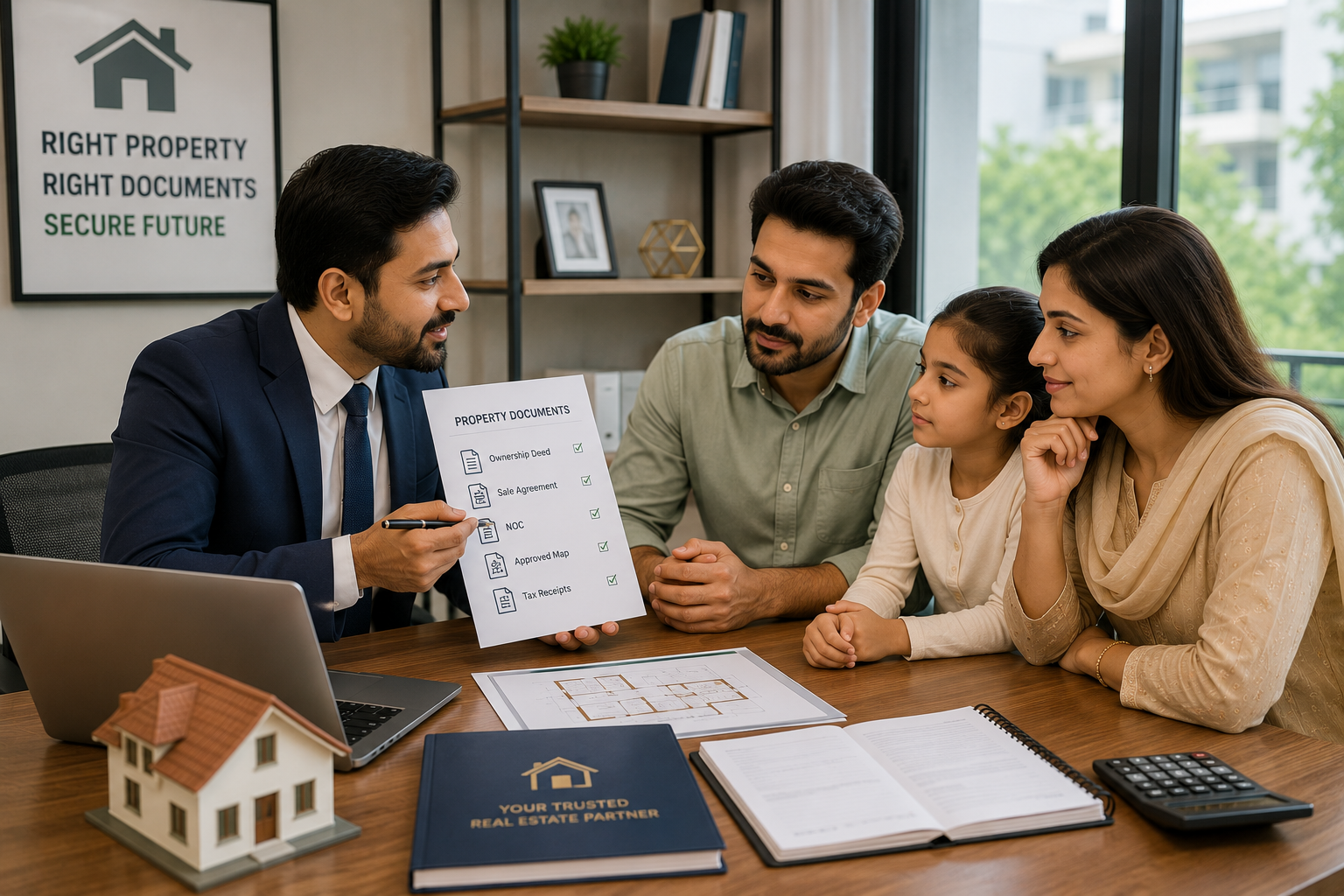
Pakistan Real Estate Statistics You Should Know
Understanding broader market trends helps buyers make informed long-term decisions.
Population Growth
Pakistan continues to experience population growth and urban expansion, increasing demand for housing in major cities such as Lahore, Karachi, Islamabad, Rawalpindi, Faisalabad, and Multan.
Urbanization
Rapid urbanization has increased demand for:
- Residential housing
- Apartments
- Commercial spaces
- Mixed-use developments
Growing cities often create new investment opportunities as infrastructure expands.
Overseas Pakistanis
Overseas Pakistanis remain an important contributor to Pakistan’s economy through remittances, and many choose to invest in residential and commercial real estate for long-term wealth creation.
Infrastructure Development
Major road networks, ring roads, motorways, public transport systems, and commercial developments continue to influence property demand in different regions.
Note: Market conditions, tax policies, and property values can change over time. Always verify the latest data before making investment decisions.
Frequently Asked Questions
1. Is buying property in Pakistan a good investment?
Property can be a valuable long-term investment when purchased after proper legal verification, financial planning, and market research. However, every investment carries risks, so evaluate your personal goals and risk tolerance before buying.
2. What documents should I check before buying property?
Common documents include:
- Sale Deed
- Registry
- Mutation Record
- Allotment Letter (where applicable)
- Transfer Letter
- Property Tax Records
- Seller’s CNIC
- Approved Layout Plan (for housing societies)
Requirements may vary depending on the property type and location.
3. How can I verify property ownership?
Verify ownership through the relevant land records authority or development authority, review original ownership documents, and consider having them examined by a qualified property lawyer.
4. Can Overseas Pakistanis buy property?
Yes. Overseas Pakistanis can purchase property in Pakistan, but they should follow secure legal procedures, use recognized banking channels, and verify all documents before completing the transaction.
5. Should I hire a property dealer?
A reputable property dealer can help identify suitable properties and simplify the buying process. However, buyers should still independently verify documents and legal status.
6. How long does the buying process take?
The timeline varies depending on document verification, negotiations, financing, and administrative procedures. Well-prepared transactions generally progress more smoothly than those with incomplete documentation.
7. What is mutation?
Mutation is the official update of government land records after ownership changes. Completing mutation helps ensure that official records reflect the new owner’s details.
8. What is the difference between registration and mutation?
Registration legally records the property transaction, while mutation updates the land records to reflect the change in ownership. Both steps are important.
9. What are the biggest mistakes buyers make?
Common mistakes include:
- Skipping legal verification
- Ignoring additional costs
- Buying in unapproved societies
- Trusting verbal promises
- Failing to inspect the property
10. Should I buy a plot or a house?
The answer depends on your goals.
- A plot offers flexibility for future construction and may suit long-term investors.
- A house is ideal if you want immediate occupancy or rental income.
11. Can I buy property without visiting it?
Yes, especially for Overseas Pakistanis, but only after independent verification, virtual inspections, and proper legal representation.
12. How can I reduce the risk of property fraud?
- Verify ownership.
- Check society approval.
- Review original documents.
- Avoid cash transactions without documentation.
- Use written agreements.
- Consult legal professionals when necessary.
Final Property Buying Checklist
Before completing your purchase, confirm that you have:
✅ Determined your budget
✅ Researched the market
✅ Compared multiple properties
✅ Verified ownership
✅ Verified the seller
✅ Confirmed society approval
✅ Inspected the property
✅ Reviewed legal documents
✅ Calculated taxes and fees
✅ Signed a written agreement
✅ Completed registration
✅ Completed mutation
✅ Received possession
✅ Collected all original documents
✅ Updated utility connections
Completing each item on this checklist significantly reduces the risk of legal or financial complications.
Final Thoughts
Buying property in Pakistan can be one of the most rewarding financial decisions you make—but only when approached with careful planning and informed decision-making.
Rather than focusing solely on price, successful buyers evaluate:
- Legal ownership
- Property condition
- Location
- Infrastructure
- Future development
- Government approvals
- Total acquisition cost
- Long-term investment potential
Taking the time to complete proper due diligence today can help you avoid expensive problems tomorrow.
Whether you are purchasing your first home, investing in a residential plot, buying commercial real estate, or planning for your family’s future, following the structured process outlined in this guide will help you make confident, well-informed decisions.
Continue Your Property Journey with Online Property Guru
Buying property is only one part of the real estate journey.
At Online Property Guru, our goal is to educate, inform, and connect buyers, investors, homeowners, and real estate professionals with reliable resources.
Explore our platform to:
- Read expert real estate blogs
- Learn about property investment in Pakistan
- Find trusted property dealers
- Connect with builders and developers
- Discover architects and interior designers
- Find construction companies
- Hire plumbers, electricians, and other home improvement professionals
- Learn about buying, selling, and maintaining property
- Explore digital marketing and website development services for real estate businesses
Whether you are buying your first home, expanding your investment portfolio, or growing your real estate business, Online Property Guru is designed to support every stage of your property journey.